|
Dear Subscriber First Name, Maybe you’ve heard, “Kids these days are constantly entertained,” or “They need to learn how to be bored.” It’s often well-meaning advice, but it can add to the guilt or leave you wondering if you’re doing enough—or too much. There’s already so much pressure on you as a parent—and hearing things like “kids need to be bored” doesn’t help. And while there’s some truth in it, I think it’s more accurate to reframe it. Kids need the space boredom creates, but not boredom for boredom’s sake. It’s about giving children the opportunity to practice self-direction, imagination, and creative thinking. When children have room in their day without a screen, an activity, or a plan, they have the chance to tolerate stillness, practice self-direction, and tap into their creativity. So maybe the better question isn’t “Should kids be bored?”
It’s:
“How can I create the right kind of space for my child to explore, imagine, and create?” While boredom can lead to creativity, expecting your child to know exactly how to use that open-ended time—without any support—might be too big of a leap if they’re used to a more structured day or frequent adult involvement. Especially if your child is neurodivergent, anxious, or highly sensitive because they might need more scaffolding and support. That’s why it helps to be prepared. We can take inspiration from the Reggio Emilia approach, where provocations—thoughtful invitations to explore—are used to spark curiosity and encourage children to engage deeply with their materials. At home, this might look like setting out a few toys with a creative prompt or asking an open-ended question that nudges them into imaginative play. You don’t need to buy anything new to reignite your child’s interest in their toys. In fact, you probably already have everything they need to create engaging provocations right at home. Below are some tips to present familiar toys in a new light to spark curiosity and creativity: Rotate and Reduce: Start by clearing some space. Put most toys away and set out just a few with intention. Less is more—kids are more likely to engage when they’re not overwhelmed. Add a Twist: Pair toys in unexpected combinations. Blocks and animal figures. Playdough and toy vehicles. Magnatiles and flashlights. Think of ways they could be used together. Use Prompts: You might need to help get things started by sitting down with your child, asking a playful question, or offering a simple idea. Try saying things like: Can you build a zoo for your stuffed animals? What kind of restaurant would your stuffed animals want to eat at? What do you need to set it up? Could your blocks become a city? What buildings would your people or animals need? Can you turn your play kitchen into a bakery? What treats are on the menu? Could your cars go through an obstacle course? What can you use to build one?
Include Loose Parts: Everyday objects—like jar lids, cardboard tubes, fabric scraps, or bottle caps—can spark amazing creativity when used as “loose parts.” These open-ended materials invite sorting, stacking, building, and imagining. Always supervise and avoid items that could be choking hazards, especially for children under 3. With the right materials, your child might just turn a pile of “nothing” into something magical. Think Like a Museum Curator: Lay things out in an inviting way. Put playdough tools on a tray with a few lids, shells, and buttons. Place a favorite toy in a new spot with an accessory (like a cape or a crown). Just changing the context can make it feel new again. Follow Their Interests: If your child is into space, set out paper, foil, and balls to make planets. If they love animals, prompt them to build a habitat or rescue center.
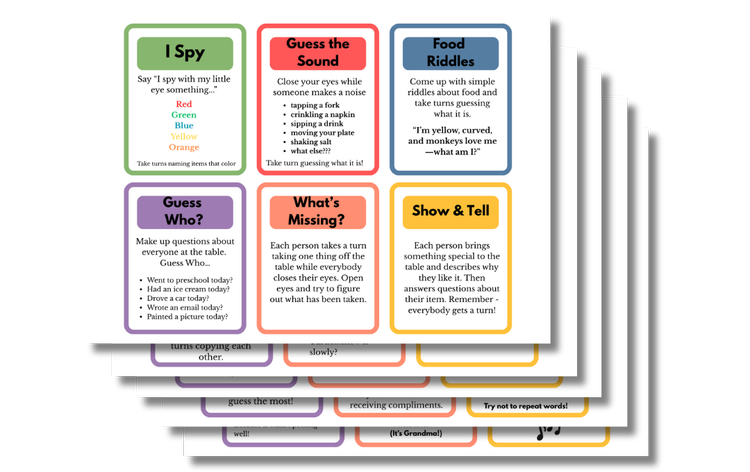
When you set up your child’s toys in a new or unexpected way, you’re not telling them how to play—you’re offering a spark to help them get started. That little nudge can make old toys feel exciting again, simply because they’re being used in a fresh, creative way. If setting up play prompts or rotating toys sounds like a lot of work—trust me, I get it! That’s why one of my favorite low-effort, high-impact tools is to create a “Play Prompt Jar”—a go-to collection of simple, screen-free activity ideas your child can pull from when they’re feeling stuck or looking for something to do. How to Make a Play Prompt Jar: Grab a jar, cup, or small box. Use slips of paper, craft sticks, or tongue depressors. Write one idea on each slip—easy, open-ended activities that don’t require prep. Your child can help you come up with ideas! Keep it somewhere your child can access (or where you can easily grab it in a pinch).
Activity Ideas: These activities are easy to set in motion, require no special materials, and encourage your child to think, move, and play independently. Color Hunt: Have your child find and bring you three items of the same color (e.g., all yellow or all blue). Animal Parade: Ask your child to move like different animals across the room—crawling like a bear, hopping like a frog, slithering like a snake. Freeze Dance: Turn on music (ask Alexa or use your phone) and let your child dance until the music pauses—then freeze! Treasure Hunt: Give your child a list of simple household items to find—like something soft, something round, and something that smells good. Sock Match-Up: Dump out a pile of clean socks and have your child find the matching pairs. Tupperware Puzzle: Open the drawer of plastic containers and have your child match each lid to its container. Hide & Snack: Hide a small snack somewhere in the room and let your child search for it. (The prize is getting to eat it!) Shape Spy: Ask your child to search the room and find objects that are shaped like circles, squares, or triangles. Laundry Toss: Set up an empty laundry basket and have your child toss clothes into it from across the room like a game. Building Forts: Hand over a few sheets or blankets and invite your child to create “fort city.” Let them bring in a few real kitchen items like pots and pans to inspire pretend play inside.
By offering a few thoughtful ideas, setting up a play prompt, or keeping a jar of simple activities on hand, you’re teaching your child how to use open-ended time. And that’s a powerful skill.
|